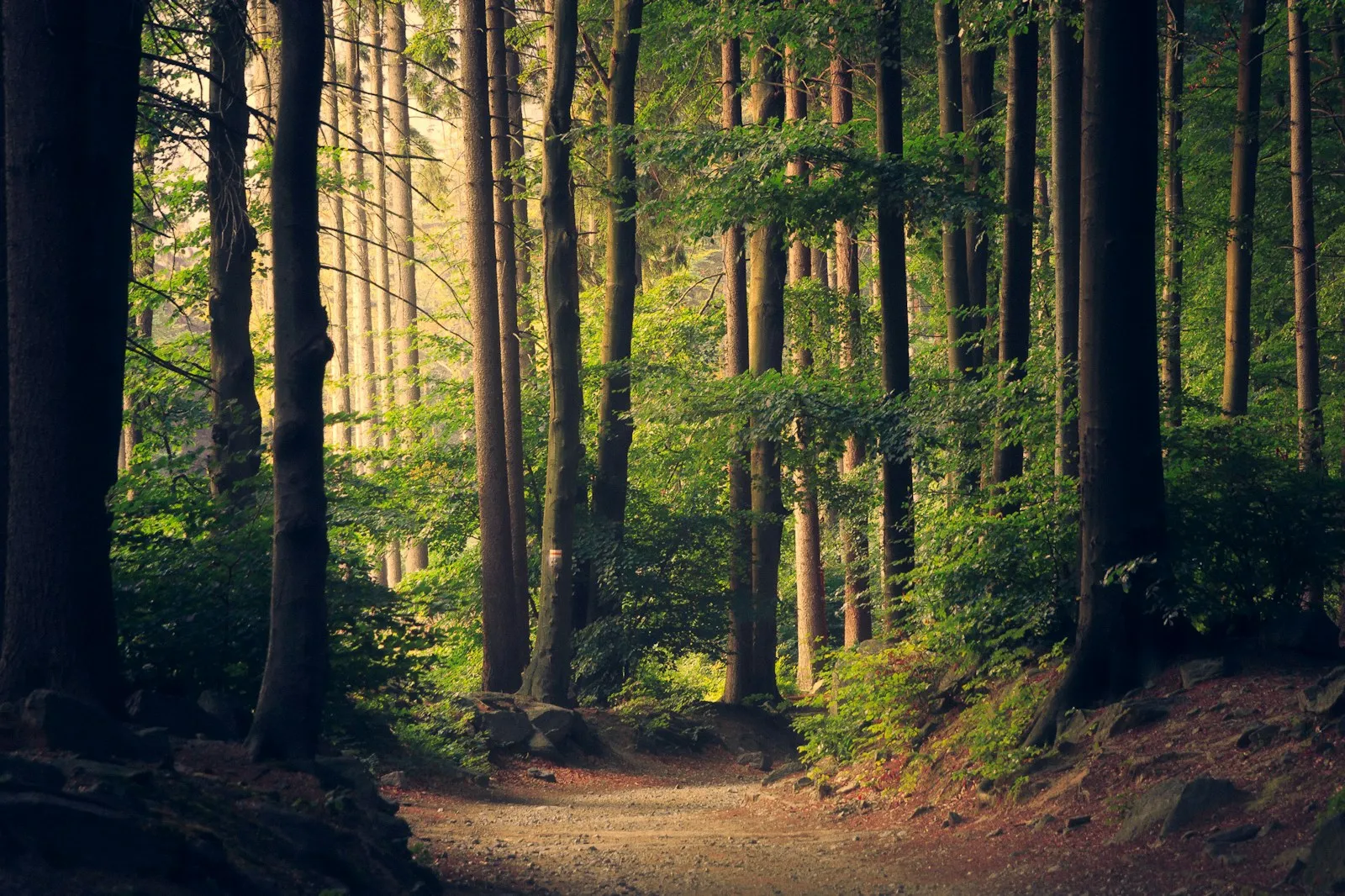

Beneath every forest floor, a network operates that has no headquarters, no managers, and no blueprint. It moves carbon, nitrogen, phosphorus, and water between trees that would otherwise have no way to share them. It connects seedlings to established trees that subsidize their growth. It routes resources away from dying trees toward living ones. It has been doing this, in various forms, for at least 450 million years.
The mycorrhizal network — the web of fungal threads that colonizes tree roots and extends their reach far into the soil — is the subject of a new meta-analysis synthesizing data from over 400 forest sites on six continents. The picture that emerges is larger and more functionally significant than previous estimates suggested.
The scale of the network
The analysis found that mycorrhizal fungi connect, on average, 47 percent of trees in a given forest plot — not just neighboring trees, but trees separated by tens of meters. In old-growth forests, where the network has had centuries to develop, connectivity rises to over 70 percent.
Carbon transfer between trees through the network is measurable and significant. In one subset of sites, up to 40 percent of the carbon in the needles of shade-suppressed seedlings had come from neighboring adults via fungal threads. The seedlings were, in a meaningful sense, being fed by the forest.
Complexity and limits
The popular framing of the “wood wide web” — a cooperative internet of trees sharing resources altruistically — overstates what the data actually shows. Fungi are not altruistic. They are organisms pursuing their own reproductive interests, which happen to align with the interests of the trees they colonize. The network transfers resources because doing so benefits the fungi, not because trees have decided to share.
What is clear is that the network is load-bearing in ways that silviculture has only recently begun to account for. Clear-cutting destroys it. Selective logging disrupts it. Replanting with non-native species that form different fungal partnerships creates forests that look complete from above but are functionally impoverished below ground.