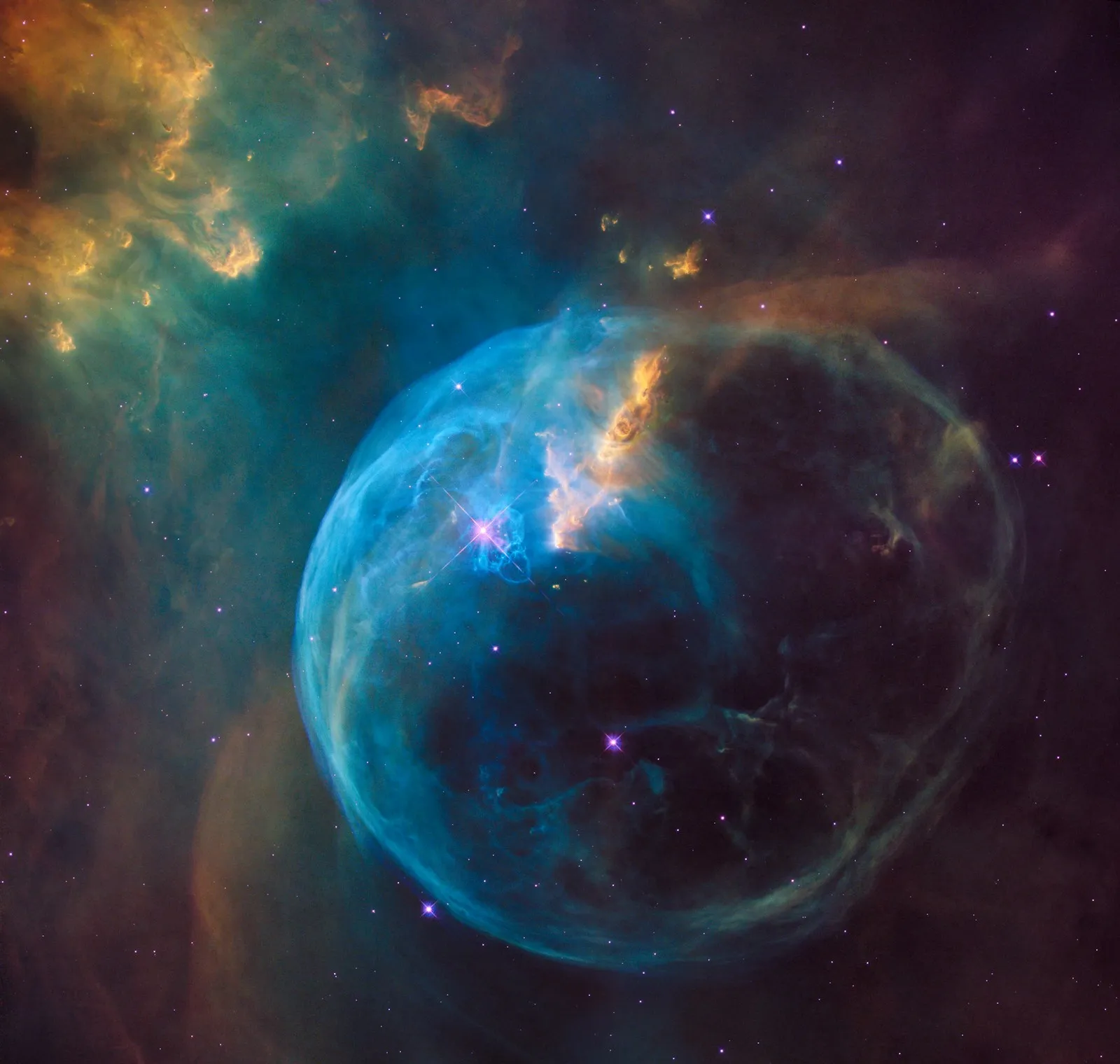

The first image released to the public showed a patch of sky the size of a grain of sand held at arm’s length. In it, thousands of galaxies. Behind some of them, bent into arcs by the gravity of intervening clusters, thousands more. The image had taken twelve and a half hours to capture. It showed light that had been travelling for 4.6 billion years.
People cried. Scientists cried. The engineers who had spent twenty years building the instrument that captured it cried. The observatory had been delayed so many times, and cost so much more than anyone had planned, that the expectation of disappointment had become a kind of professional habit. The images dissolved it in an afternoon.
What the first year produced
Twelve months of operations have yielded data that will take decades to fully process. Several findings have already changed the field. The overabundance of early massive galaxies — structures that should not have existed in the young universe — has been confirmed across dozens of independent observations and is now the subject of serious theoretical revision rather than dismissal.
The atmosphere of an exoplanet, WASP-39b, was analysed in detail that was not previously possible: carbon dioxide, sulphur dioxide, water vapour, and cloud particles all detected by their spectral signatures. The exoplanet was not in a habitable zone, but the technique proved that atmospheric characterisation at this resolution is real, not aspirational.
Closer to home, images of Jupiter revealed details in its atmosphere that ground-based telescopes had never resolved: fine structure in the Great Red Spot, auroras at both poles, faint rings not previously known to exist. These images required minutes, not hours. They were produced almost as an afterthought.
What comes next
The observatory has enough propellant for at least twenty years of operations, possibly more. The first year’s science programme was built around questions that astronomers knew they wanted to answer. The next phase will be built around questions the first year raised — which is how science is supposed to work, and rarely gets to.
The grain-of-sand image is now a poster on the walls of classrooms where children who will spend their careers answering those questions are, at this moment, learning to read.